

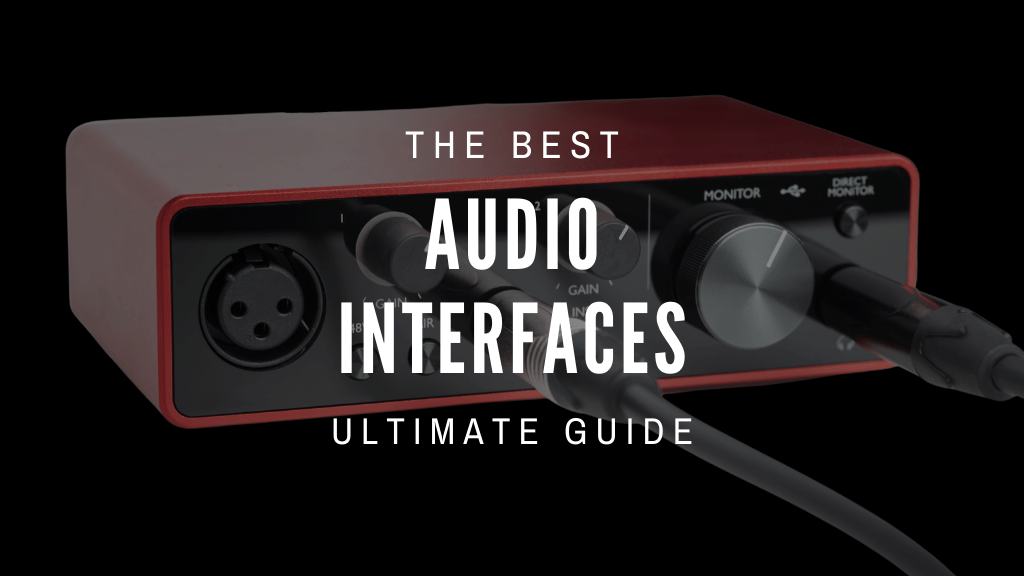
Ever wondered why your recordings sound muddy compared to professional tracks? The answer often lies in one crucial piece of gear: your audio interface. This little box might seem insignificant, but it’s the unsung hero of every great recording.
Whether you’re laying down vocal tracks in your bedroom or producing the next chart-topper, choosing the right audio interface can make or break your sound. Let’s dive into everything you need to know about finding the perfect audio interface for your setup.
What is an Audio Interface?
Think of an audio interface as a translator between your analog world and your computer’s digital brain. It’s the bridge that converts those beautiful analog sound waves from your microphone or guitar into digital data your DAW can understand.
AD/DA Conversion Explained
Here’s where the magic happens. Audio interfaces house analog-to-digital (AD) and digital-to-analog (DA) converters. When you sing into a mic, the audio interface converts those analog sound waves into digital ones and zeros. When you play back your track, it converts those digital bits back into analog signals for your monitors.
The quality of these converters directly impacts your sound. Cheap converters? Muddy, lifeless recordings. High-quality converters? Crystal-clear, professional results that’ll make you wonder why you waited so long to upgrade.
The Crucial Bridge Between Analog and Digital
Your audio interface isn’t just converting signals—it’s preserving the integrity of your performance. Every nuance, every breath, every string vibration depends on how well this device handles the conversion process.
Why Do You Need an Audio Interface?
Your computer’s built-in sound card might seem adequate, but it’s like trying to paint the Sistine Chapel with crayons. Here’s why upgrading to a dedicated audio interface is a game-changer:
Limitations of Standard Computer Sound Cards
Standard sound cards are built for basic audio playback, not professional recording. They typically offer:
- Poor preamps that add noise and distortion
- Limited I/O options (usually just a single input)
- High latency that makes real-time monitoring impossible
- Inferior converters that compress your dynamic range
Superior Sound Quality
Professional audio interfaces feature high-grade preamps and converters designed specifically for recording. You’ll hear details in your recordings you never knew existed. That guitar tone you’ve been chasing? It was there all along—your old setup just couldn’t capture it.
Reduced Latency
Nothing kills creativity faster than hearing your voice half a second after you sing. Quality audio interfaces offer near-zero latency monitoring, letting you record with confidence and stay in the groove.
Expanded Connectivity
Modern audio interfaces provide:
- XLR inputs for professional microphones
- TRS/Hi-Z inputs for guitars and basses
- Phantom power for condenser mics
- Multiple outputs for monitor speakers and headphones
- MIDI connectivity for keyboards and controllers
Choosing the Best Audio Interface: An Overview
Selecting the right audio interface depends on your specific needs, budget, and future plans. Are you a singer-songwriter who needs two inputs? A band that requires eight channels? A producer working with multiple synthesizers?
The best audio interfaces balance quality, features, and value. They deliver professional results without breaking the bank or overwhelming beginners with unnecessary complexity.
Our Top Picks: The Best Audio Interfaces of 2025
Our Testing Methodology
We’ve put dozens of audio interfaces through rigorous testing, evaluating everything from preamp quality to converter performance. Our team measures noise floors, tests latency, and records countless hours of audio to bring you honest, data-driven recommendations.
We consider build quality, included software, compatibility, and real-world usability. Because what good is pristine audio quality if the device breaks after six months?
Comparative Specifications of Top Audio Interfaces
| Audio Interface | Inputs | Outputs | Sample Rate | Bit Depth | Connection | Price Range |
|---|---|---|---|---|---|---|
| Focusrite Scarlett 2i2 4th Gen | 2 | 2 | Up to 192kHz | 24-bit | USB-C | $180-220 |
| Universal Audio Apollo Twin X | 2 | 6 | Up to 192kHz | 24-bit | Thunderbolt 3 | $900-1200 |
| Behringer U-Phoria UMC22 | 1 | 2 | Up to 48kHz | 16-bit | USB 2.0 | $50-70 |
| Audient iD4 MkII | 2 | 2 | Up to 96kHz | 24-bit | USB-C | $200-250 |
| RME Babyface Pro FS | 4 | 4 | Up to 192kHz | 24-bit | USB 3.0 | $750-850 |
| IK Multimedia AXE I/O | 2 | 5 | Up to 192kHz | 24-bit | USB 2.0 | $350-400 |
| SSL SSL2+ | 2 | 4 | Up to 192kHz | 24-bit | USB-C | $250-300 |
Overall Best Audio Interface: Focusrite Scarlett 2i2 4th Gen
The Focusrite Scarlett 2i2 4th Gen hits the sweet spot between quality, features, and affordability. It’s the audio interface we recommend most often, and for good reason.
Key Specifications
- 2 microphone/line/instrument inputs
- 2 balanced line outputs
- 24-bit/192kHz conversion
- USB-C connectivity
- Direct monitoring with mix control
- Includes Ableton Live Lite and plugin bundle
Reasons to Choose the Scarlett 2i2
This audio interface delivers professional results without the professional price tag. The fourth-generation preamps offer incredibly low noise and generous headroom. You’ll capture every detail of your performance, from the subtlest vocal inflection to the most aggressive guitar riff.
The USB-C connection ensures future compatibility, while the included software bundle gets you recording immediately. The build quality feels solid—this isn’t a device you’ll need to replace in a year.
Considerations
With only two inputs, larger recording sessions require multiple takes or additional gear. Some users might want more advanced features like loopback functionality or extensive I/O expansion.
Expert Assessment
The Scarlett 2i2 4th Gen represents the current pinnacle of entry-to-intermediate audio interfaces. It’s trusted by countless home studio owners and has appeared on more hit records than you might imagine.
Best Value Audio Interface: Universal Audio Apollo Twin X
When you want professional results with legendary processing power, the Universal Audio Apollo Twin X delivers exceptional value despite its higher price point.
Key Specifications
- 2 Unison-enabled preamps
- 6 outputs including monitor and headphone outs
- Thunderbolt 3 connectivity
- Real-time UAD plugin processing
- 24-bit/192kHz conversion
- Console 2.0 software included
Reasons to Choose the Apollo Twin X
The UAD plugin ecosystem transforms this audio interface into a virtual analog studio. Record through legendary preamp and compressor emulations in real-time with near-zero latency. The Unison technology actually changes the preamp’s impedance to match the emulated hardware.
Sound quality is exceptional, with converters that rival units costing thousands more. If you’re serious about achieving that “analog sound” in the digital domain, this audio interface is your ticket.
Considerations
The higher price point puts it beyond many budgets. Thunderbolt 3 connectivity requires compatible computers, and additional UAD plugins cost extra (though the included bundle is generous).
Best Budget Audio Interface: Behringer U-Phoria UMC22
Need professional recording capability without breaking the bank? The Behringer UMC22 proves you don’t need to spend a fortune for decent results.
Key Specifications
- 1 XLR/TRS combo input
- 1 instrument input
- RCA stereo outputs
- 16-bit/48kHz operation
- USB 2.0 powered
- Direct monitoring
Reasons to Choose the UMC22
At under $70, this budget audio interface gets you into professional recording territory. The preamp is surprisingly clean for the price, and the direct monitoring eliminates latency issues. It’s perfect for singer-songwriters, podcasters, or anyone starting their recording journey.
Considerations
Limited sample rates and single XLR input restrict recording options. Build quality feels budget-appropriate—adequate but not inspiring. You’ll likely outgrow this audio interface as your needs expand.
Best Audio Interface for First-Timers: Audient iD4 MkII
The Audient iD4 MkII combines British engineering excellence with beginner-friendly operation. It’s the audio interface that grows with you.
Key Specifications
- Class-A discrete preamp with Console-style EQ
- JFET instrument input
- 24-bit/96kHz conversion
- USB-C bus powered
- ScrollControl virtual scroll wheel
- iD mixer software
Advantages
That Audient preamp is the same design found in their professional consoles—you’re getting legitimate high-end sound in a compact package. The JFET instrument input adds warmth and character to guitars and basses. The ScrollControl feature lets you adjust DAW parameters directly from the interface.
Potential Drawbacks
Only two inputs might limit some users. The compact size, while portable, means smaller knobs that some prefer larger controls.
Expert Assessment
Audient’s reputation for exceptional preamp design makes this audio interface a standout choice. You’re essentially getting boutique preamp quality at a mainstream price.
Best Audio Interface for Professionals: RME Babyface Pro FS
When failure isn’t an option, professionals turn to RME. The Babyface Pro FS delivers uncompromising quality in a portable package.
Key Specifications
- 4 analog inputs/outputs
- Ultra-stable drivers with sub-2ms latency
- 192kHz/24-bit conversion
- TotalMix FX software mixer
- Rock-solid build quality
- 5-year warranty
Primary Advantages
RME’s legendary driver stability means this audio interface simply works, every time. The TotalMix FX software provides unprecedented routing flexibility. Conversion quality rivals units costing thousands more.
Professional touring musicians and top studios rely on RME because it never lets them down. When your livelihood depends on your gear working perfectly, this audio interface delivers.
Main Consideration
The learning curve is steeper than plug-and-play alternatives. Advanced features require time to master, though the results justify the investment.
Best Audio Interface for Recording Guitars: IK Multimedia AXE I/O
Guitar players have unique needs, and the AXE I/O was designed specifically for six-string enthusiasts.
Key Specifications
- Dedicated guitar input with Pure/JFET/Active modes
- Amp output for re-amping
- Z-Tone impedance control
- Tuner output
- Includes AmpliTube 5 MAX
Reasons to Choose the AXE I/O
The variable impedance input lets you match vintage or modern pickups perfectly. Re-amping capability means you can record clean DI tracks and add amp character later. The included AmpliTube software provides a massive collection of amp and effect models.
Considerations
It’s somewhat specialized—great for guitarists, but other musicians might prefer more general-purpose options. The focus on guitar features means fewer inputs for other instruments.
Best Audio Interface for Mac Users: Universal Audio Apollo Twin X
Mac users benefit from the Apollo Twin X’s optimized macOS integration and Thunderbolt 3 performance advantages detailed in our “Best Value” section above.
Best Interface for Iconic Heritage: Solid State Logic SSL2+
When you want legendary SSL console sound in your home studio, the SSL2+ delivers authentic British engineering.
Key Specifications
- 2 SSL-designed preamps
- 4-output capability
- Legacy 4K button for SSL console character
- 24-bit/192kHz conversion
- USB-C connectivity
Advantages
That SSL heritage isn’t just marketing—you’re getting genuine console-style preamps with the warmth and character of legendary SSL desks. The Legacy 4K button adds subtle harmonic enhancement that makes everything sound more polished.
Honorable Mentions & Other Great Options
Several other audio interfaces deserve recognition:
MOTU M2 offers exceptional value with ESS Sabre32 Ultra DACs and professional specifications at a competitive price. MOTU UltraLite mk5 expands I/O options for larger projects.
Universal Audio Volt 276 brings UA quality to budget-conscious buyers with vintage tube preamp modeling.
The Focusrite Scarlett 4i4 4th Gen and 18i20 4th Gen scale up for bigger productions while maintaining the Scarlett family’s reliability.
Black Lion Audio Revolution 6×6 provides boutique American engineering with exceptional converter quality.
Rode RØDECaster Duo targets podcasters and content creators with specialized features like automatic mixing and voice processing.
Arturia MiniFuse 2 and Lewitt Connect 2 represent the new generation of USB-C audio interfaces with modern connectivity and compact designs.
Universal Audio Apollo x8p handles large-scale productions with 18 inputs and rack-mount convenience.
Audio Interface Buying Guide: What to Look For
Choosing the Right I/O Configuration
Input and output requirements vary dramatically between users. Consider both your current needs and future expansion plans.
Microphone Preamps and Phantom Power
Quality preamps make the difference between amateur and professional recordings. Look for clean, low-noise designs with adequate headroom. Phantom power is essential for condenser microphones—ensure your chosen audio interface provides it.
Instrument-Level (Hi-Z) Inputs
Guitar and bass inputs require high impedance to properly load pickups. Dedicated Hi-Z inputs preserve your instrument’s natural tone without the impedance mismatch that dulls your sound.
Line-Level Inputs and Outputs
Line inputs accommodate keyboards, drum machines, and other gear. Multiple line outputs enable monitor mixing, effects sends, and headphone distributions.
Digital I/O (ADAT, S/PDIF)
Digital expansion via ADAT or S/PDIF multiplies your I/O capability. Connect additional preamps or digital processors without compromising signal quality.
Computer Connectivity Options
Your connection method affects performance, compatibility, and future-proofing.
USB Connections
USB 2.0 handles basic stereo recording adequately but struggles with higher channel counts. USB 3.0 and USB-C provide greater bandwidth and improved stability for demanding applications.
Thunderbolt 3
Thunderbolt 3 offers massive bandwidth and ultra-low latency. It’s the preferred connection for professional applications, though it requires compatible computers.
FireWire (Historical Context)
Once the professional standard, FireWire is now largely obsolete. Avoid new FireWire interfaces unless you have specific legacy requirements.
Understanding Tech Specs: What Do They Mean for Your Sound?
Bit Depth and Sample Rate
24-bit/192kHz capability provides professional quality and future-proofing. Higher specifications offer greater dynamic range and frequency response, though 24-bit/96kHz is sufficient for most applications.
Noise and Distortion (THD+N)
Lower THD+N figures indicate cleaner preamps and converters. Look for specifications below -100dB for professional quality.
Dynamic Range
Greater dynamic range captures both quiet details and loud peaks without compression. Professional audio interfaces typically offer 120dB or greater dynamic range.
Frequency Response
Flat frequency response ensures accurate reproduction across the audible spectrum. Avoid interfaces with significant peaks or dips in their frequency response curves.
Essential Features and Considerations
Build Quality and Durability
Solid construction ensures longevity and reliable performance. Metal chassis designs typically outlast plastic alternatives, especially in professional environments.
Low-Latency Monitoring
Direct monitoring bypasses computer processing for real-time playback without delay. This feature is essential for comfortable recording sessions.
MIDI I/O
MIDI connectivity enables keyboard and controller integration. While USB MIDI is common, dedicated MIDI ports offer greater reliability.
Loopback Feature
Loopback functionality routes computer playback back into the interface for podcast recording or streaming applications.
Included Software and Bundles
Bundled DAWs and plugins add value and get you recording immediately. Consider the quality and usefulness of included software when comparing audio interfaces.
Scalability and Future Expansion
Consider how your needs might grow. Expandable interfaces with digital I/O or multiple unit linking save money long-term.
Budget Considerations
Quality audio interfaces represent long-term investments. Consider total cost including necessary accessories like cables, stands, and monitors.
How We Chose and Tested the Best Audio Interfaces
Why You Should Trust Our Recommendations
Our testing methodology combines objective measurements with real-world usage scenarios. We measure noise floors, test latency performance, and evaluate preamp quality using professional test equipment.
Hands-on testing includes recording sessions with various microphones, instruments, and genres. We consider ease of use, driver stability, and long-term reliability based on extended evaluation periods.
Our team brings decades of combined experience in professional audio, from bedroom producers to major-label engineers. We understand what matters in real recording situations, not just specification sheets.
Transparency guides our recommendations. We disclose testing methods, acknowledge limitations, and provide honest assessments of each product’s strengths and weaknesses.
Common FAQs About Audio Interfaces
Let’s tackle some questions I hear all the time in the studio:
What’s the difference between USB and Thunderbolt audio interfaces?
Thunderbolt interfaces generally offer lower latency and higher bandwidth, but they’re often more expensive. For most home studios, a good USB interface will do the job just fine.
How many inputs do I need for my home studio?
It depends on what you’re recording. If you’re a solo artist, 2 inputs are usually enough. If you’re recording a full band, you might need 8 or more.
Can I use multiple audio interfaces together?
In most cases, yes, but it can be tricky. Some operating systems and DAWs allow you to create an aggregate device, combining multiple interfaces. However, it’s usually simpler to use a single interface with enough I/O for your needs.
Conclusion: Finding Your Perfect Audio Interface
The best audio interface for you depends on your specific needs, budget, and future plans. Whether you’re a beginner seeking your first professional recording setup or a seasoned producer upgrading your studio, the right audio interface elevates your entire creative process.
Sound quality, latency performance, and connectivity options form the foundation of any good audio interface. Consider your I/O requirements, preferred connection method, and essential features when making your decision.
Remember that your audio interface is an investment in your creative future. Choose wisely, and you’ll enjoy years of professional-quality recordings that capture every nuance of your musical vision.
The perfect audio interface is out there waiting to transform your recordings from good to extraordinary. Take your time, consider your options, and prepare to hear your music like never before.